


Medical Science Liaisons
Find and connect with your Medical Affairs Contact, also known as Medical Science Liaison (MSL), in your region and specialty.

Prostate cancer ranks as the most common cancer among US men1*
new cases of prostate cancer will be diagnosed in the US in 20261
men living with prostate cancer in the US in 20252
men will be diagnosed with prostate cancer in their lifetime1
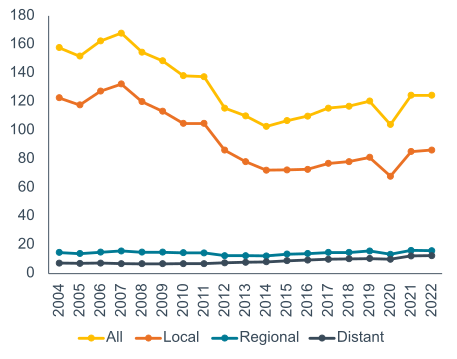
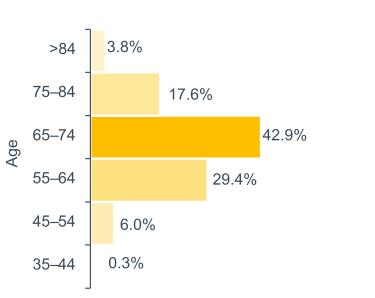
Prostate cancer incidence peaks in men between 65 and 74 years of age, with a median age at diagnosis of 68 years. Incidence rates for localized disease have declined since 2007, whereas rates for regional and distant disease have remained relatively stable.3
*Estimates are rounded to the nearest 10 and exclude basal cell and squamous cell skin cancers and in situ carcinoma except urinary bladder. Rank is based on modeled projections and may differ from observed data.1
†SEER 21 2018–2022, All Races, Males.3
SEER, Surveillance, Epidemiology, and End Results Program.
1. American Cancer Society. Cancer Facts & Figures 2026. Accessed February 3, 2026. https://www.cancer.org/content/dam/cancer-org/research/cancer-facts-and-statistics/annual-cancer-facts-and-figures/2026/2026-cancer-facts-and-figures.pdf. 2. American Cancer Society. About Prostate Cancer. Accessed February 3, 2026. https://www.cancer.org/cancer/types/prostate-cancer/about.html. 3. National Cancer Institute (NCI) Surveillance, Epidemiology, and End Results Program (SEER) ; Prostate Cancer. Accessed February 3, 2026. https://seer.cancer.gov/statfacts/html/prost.html.
Prostate cancer is characterized by sustained dependence on androgen receptor signaling, with testosterone and other androgens playing a central role in tumor growth, survival, and disease progression. As the disease advances, prostate cancer commonly shows increased biological complexity and resistance mechanisms, despite castrate testosterone levels.1,2
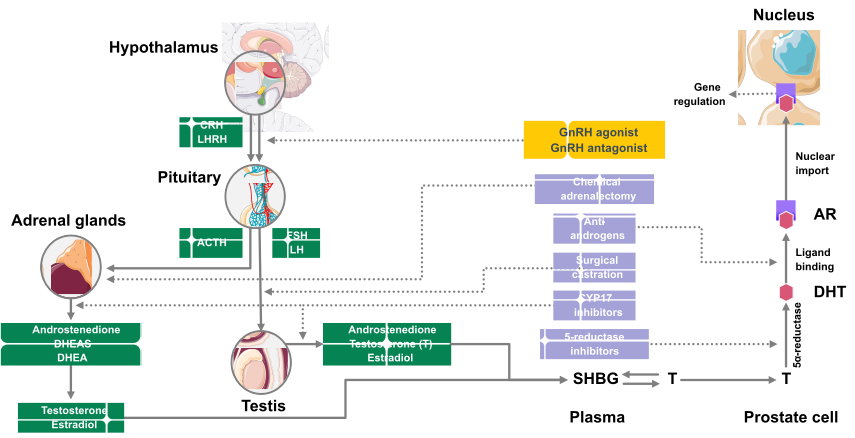
ACTH, adrenocorticotropic hormone; AR, androgen receptor; CRH, corticotropin-releasing hormone; DHEA, dehydroepiandrosterone; DHEAS, dehydroepiandrosterone sulfate; DHT, 5a-dihydrotestosterone; FSH, follicle-stimulating hormone; GnRH, gonadotropin-releasing hormone; LH, luteinizing hormone; SHBG, sex hormone-binding globulin.
1. Scher HI, et al. Endocr Relat Cancer. 2004;11:459–476. 2. Lonergan PE, Tindall DJ. J Carcinog. 2011;10:20.
Diagnosis of prostate cancer incorporates PSA testing, DRE, biopsy confirmation, and imaging to define disease extent. Management decisions take into account disease burden, symptoms, comorbidities, and prior therapies.1
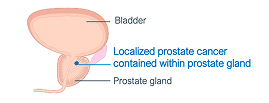
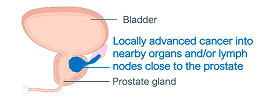
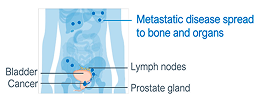
DRE, digital rectal exam; PSA, prostate-specific antigen.
1. ZERO Prostate Cancer. Prostate Cancer Stages and Grades. Accessed April 2, 2026. https://zerocancer.org/stages-and-grading.
Find and connect with your Medical Affairs Contact, also known as Medical Science Liaison (MSL), in your region and specialty.
Stay informed and stay current with updates delivered directly to your inbox.
Submit a request for more information.
+ 1 (800) 739-0565Monday - Friday, 8 AM - 8 PM ET
Please report any side effects related to any Sumitomo Pharma America, Inc. medication by contacting us. You may also contact the US Food and Drug Administration (FDA) directly by visiting www.fda.gov/Safety/MedWatch or calling 1-800-FDA-1088.
