


Medical Science Liaisons
Find and connect with your Medical Affairs Contact, also known as Medical Science Liaison (MSL), in your region and specialty.

Prevalence estimates of endometriosis vary among different populations of women.1,2 It is estimated that endometriosis is present in:
21-47%1
of women with subfertility
71-87%1
of women with chronic pelvic pain
49-75%2
of symptomatic adolescents
Endometriosis impacts ~11% of reproductive age women globally3
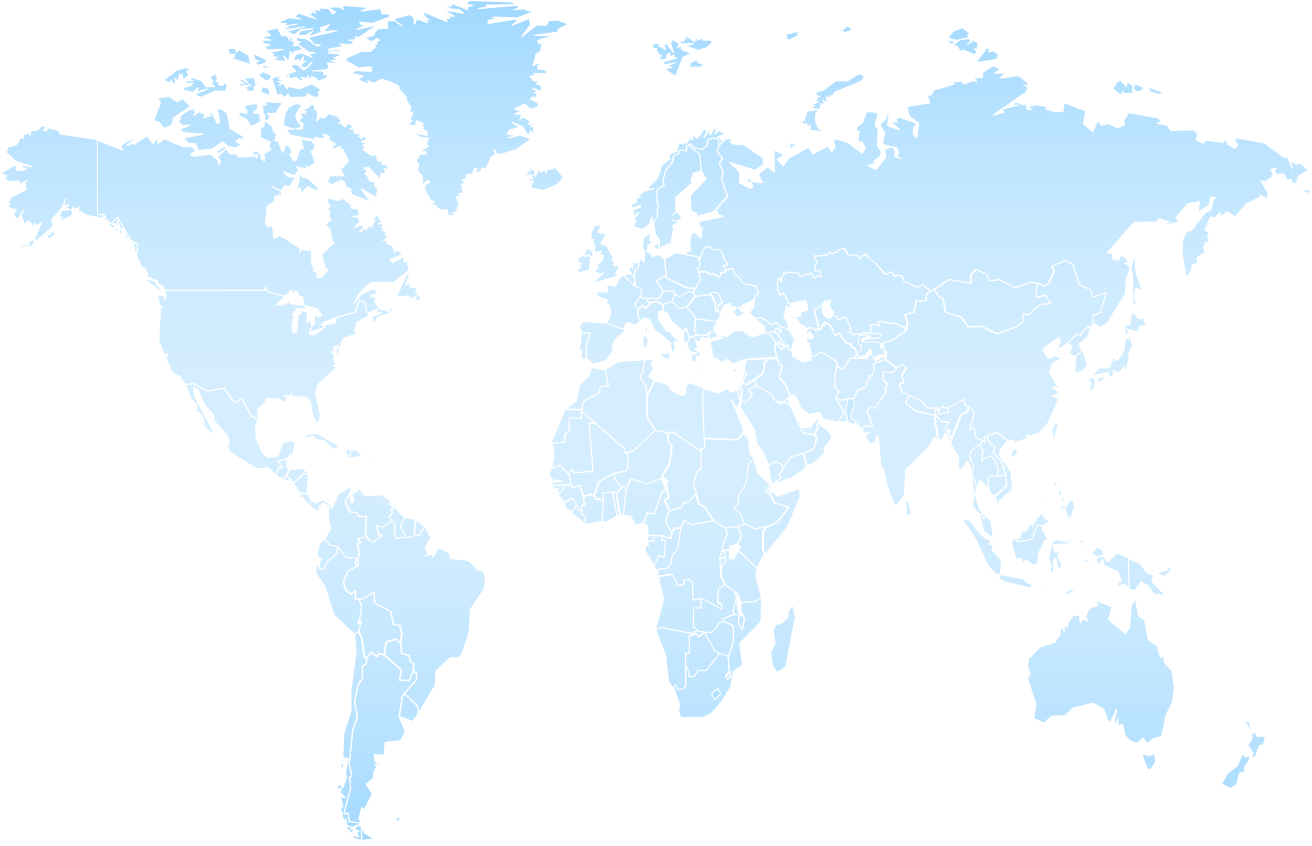
~190 million
women worldwide
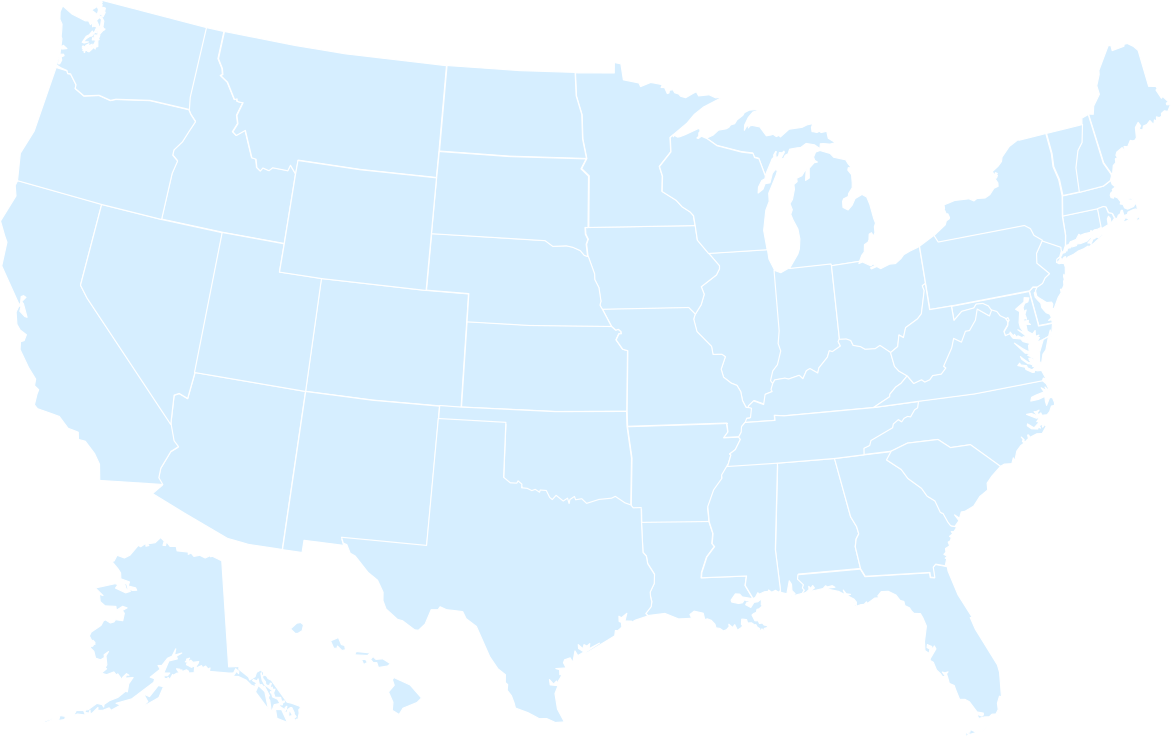
~6.5 million
women in the US
Endometriosis may affect all aspects of patients' lives and represents a significant public health problem with substantial direct and indirect costs.1,2,4
1. Falcone T, et al. Obstet Gynecol. 2018;131:557-571. 2. Zondervan KT, et al. N Engl J Med. 2020;382:1244-1256. 3. Ellis K, et al. Front Glob Womens Health. 2022;3:902371. 4. Simoens S, et al. Hum Reprod. 2012;27:1292-1299. 5. Lamvu G, et al. Obstet Gynecol. 2019;133:1120-1130. 6. Bulletti C, et al. J Assist Reprod Genet. 2010;27:441-447.
Endometriosis is a systemic, chronic, heterogeneous condition defined by the implantation of endometrial-like tissue outside the uterus.1,2 Potential pathways that may contribute to pathogenesis include endocrine, immunologic, proinflammatory, and proangiogenic processes.3-6
Endometriotic lesions become vascularized and innervated, leading to scarring and adhesions within the pelvic cavity. Extrapelvic lesions may also occur.3
Disease phenotype and lesion location vary widely, which contributes to the heterogeneity clinicians see across pain, fertility, and diagnostic presentation.7
1. Opoku-Anane J, et al. J Endometr Pelvic Pain Disord. 2020;12:3-9. 2. Falcone T, et al. Obstet Gynecol. 2018;131:557-571. 3. Zondervan KT, et al. N Engl J Med. 2020;382:1244-1256. 4. Malvezzi H, et al. J Transl Med. 2020;18:311. 5. Sourial S, et al. Int J Reprod Med. 2014;2014:179515. 6. Laganà AS, et al. Int J Mol Sci. 2019;20:5615. 7. Chapron C, et al. Nat Rev Endocrinol. 2019;15:666-682.
Endometriosis remains a diagnostic challenge; evaluation is guided by patient presentation, symptoms, and physical examination.1,2
Least severe; various colors at multiple locations within the peritoneal cavity.
Cystic masses arising from endometrial tissue.
Most severe; penetrates more than 5 mm below the peritoneal surface or infiltrates surrounding organs.
4-11 yrs
Typical delay from symptom onset to diagnosis.9,10
6 in 10
Cases are estimated to be undiagnosed.9
86%
of patients are symptomatic for 7-8 years on average before diagnosis.5
Factors contributing to diagnostic delay include disease heterogeneity, nonspecific symptoms, asymptomatic presentation, lack of available biomarkers, continued reliance on invasive methods for confirmation, and societal stigma.1,2,11,12
The long interval between symptom onset and diagnosis can lead to prolonged discomfort, reduced quality of life, and central sensitization, which may be difficult to treat and manage.9,10,13,14
ACOG, American College of Obstetricians and Gynecologists; BMI, body mass index; MRI, magnetic resonance imaging.
1. Chapron C, et al. Nat Rev Endocrinol. 2019;15:666-682. 2. Zondervan KT, et al. N Engl J Med. 2020;382:1244-1256. 3. Laganà AS, et al. Int J Mol Sci. 2019;20:5615. 4. ESHRE Guideline Endometriosis. https://www.eshre.eu/Guidelines-and-Legal/Guidelines/Endometriosis-guideline (accessed February 15, 2022). 5. Falcone T, et al. Obstet Gynecol. 2018;131:557-571. 6. Nnoaham KE, et al. Fertil Steril. 2012;98:702-712. 7. Shigesi N, et al. Hum Reprod Update. 2019;25:486-503. 8. Lin KY, et al. PLoS One. 2021;16:e0256772. 9. Agarwal SK, et al. Am J Obstet Gynecol. 2019;220:354.e1-354.e12. 10. Soliman AM, et al. J Womens Health. 2017;26(7):788-971. 11. Nisenblat V, et al. Cochrane Database Syst Rev. 2016;2:CD009591. 12. As-Sanie S, et al. Am J Obstet Gynecol. 2019;221:86-94 13. Latremoliere A, et al. J Pain. 2009;10:895-926. 14. Surrey E, et al. Adv Ther. 2020;37,1087-1099. 15. Committee on Clinical Practice Guidelines-Gynecology. Obstet Gynecol. 2026;147:432-448.
External education resource focused on endometriosis and patient support.
View ResourceFind and connect with your Medical Affairs Contact, also known as Medical Science Liaison (MSL), in your region and specialty.
Stay informed and stay current with updates delivered directly to your inbox.
Submit a request for more information.
+ 1 (800) 739-0565Monday - Friday, 8 AM - 8 PM ET
Please report any side effects related to any Sumitomo Pharma America, Inc. medication by contacting us. You may also contact the US Food and Drug Administration (FDA) directly by visiting www.fda.gov/Safety/MedWatch or calling 1-800-FDA-1088.
